
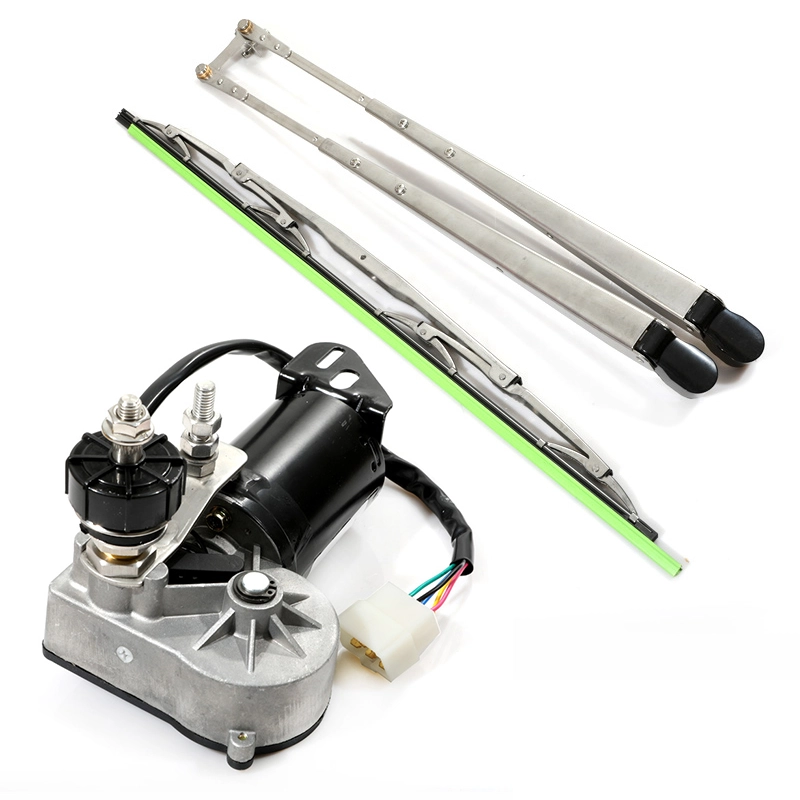
Marine Electric Wiper Assembly
Discover JIEXI's Marine Wiper Assembly, crafted from 316 stainless steel for unmatched durability and seamless integration with marine electrical systems. Essential for marine safety and reliability.
View productApproved on paper before it is approved on board: this dossier gathers the specification, the published certification set, the self-priming sequence and the service schedule for the mb1125 marine lifeboat hand pump in one place. For a buyer weighing a fixed bilge installation against a portable standby unit, the marine self priming manual pump is listed at 32 L/min with a 2 m suction distance, a 1 kg engineering-plastic body and Ø25 mm ports as standard — the sections below show where each of those numbers decides a fit.
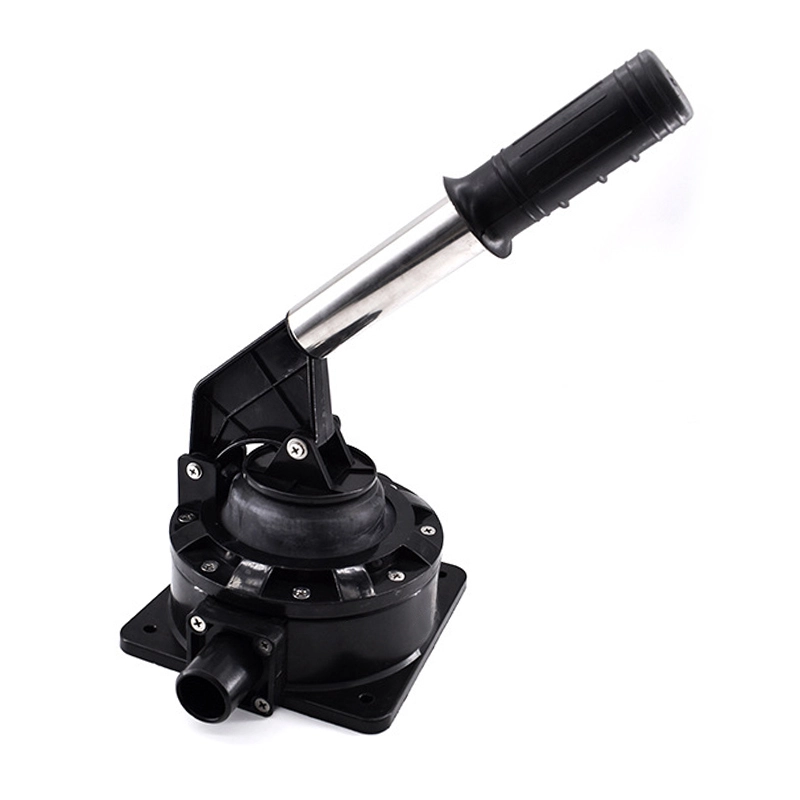
Each published value below answers a different approval question. Read them as decision gates, not as a repeat of the data sheet further down the page.
The table below reproduces the model data published for MB1125, with the two figures taken from the product description marked as such. Anything not listed here has not been stated for this model.
| Product name | Lifeboat hand pump |
| Model number | MB1125 |
| Material | Engineering plastic — described as resistant to corrosion, pressure and environmental wear |
| Rate of flow | 32 L/min |
| Repeat times | 50 /min |
| Suction distance | 2 m |
| Inlet & outlet diameter | Ø25 mm (optional Ø32/38 mm) |
| Certification | CCS Certificate, comply with IMO MSC.48(66), ISO18813:2006 |
| Medium | Seawater, fresh water, non-corrosive liquid |
| Usage | Drainage function; can be installed in narrow bilge areas where other pumps cannot be placed |
| Weight | 1 kg — stated in the product description, not in the specification table |
| Handle / base | Non-slip handle design, stable base, hand drainage |
| Drive principle | Manual diaphragm pump, reciprocating handle driving an internal linkage |
| Over-temperature device | Fusible plug that melts above 75 °C — stated in the product description |
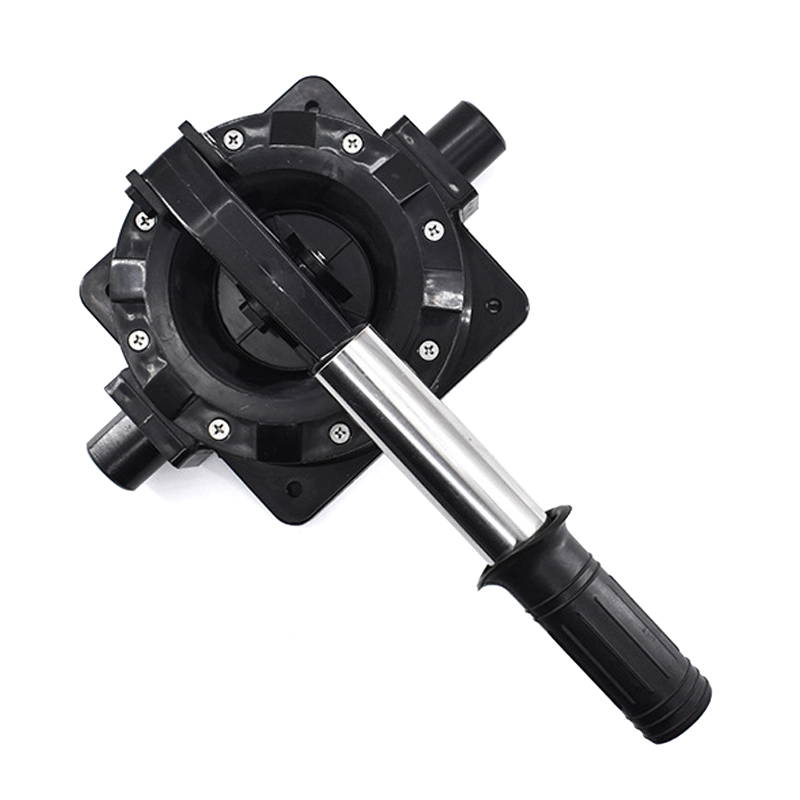
Inlet and outlet are listed at Ø25 mm as standard, with Ø32 mm and Ø38 mm offered as options on the same model.
The size that ships as the listed specification. Choose it when the existing bilge hose, strainer and through-hull fittings on the boat are already 25 mm, so no re-plumbing is needed during a refit.
Larger bore means larger hose and different fittings. It suits a new installation where the hose run is being specified from scratch, or where the yard wants a single hose family across several pumps. The published flow figure of 32 L/min belongs to the model as listed; confirm the exact configuration and current availability with the supplier before the bill of materials is frozen.
Seawater, fresh water and non-corrosive liquid only. Large solid particles and corrosive chemicals are excluded, so specify a deck strainer or pre-filter on dirty bilge water rather than relying on the pump to pass debris.
Two different certification statements appear on the product page — one in the specification table and one in the descriptive copy. A surveyor will read them separately, so they are set out side by side here with the action each one needs before sign-off.
Swipe sideways to see every column →
| Claim as published | Where it appears | What it refers to | Action before approval |
|---|---|---|---|
| CCS Certificate | Specification table | Product certificate issued by the China Classification Society | Request a copy carrying the model number MB1125 and an issue date that matches the delivery batch |
| Comply with IMO MSC.48(66) | Specification table | International life-saving appliance requirements referenced for lifeboat equipment | Confirm how the pump is covered within the approved lifeboat arrangement, not only as a standalone item |
| ISO 18813:2006 | Specification table | International standard for survival equipment for survival craft and rescue boats | Ask for the declaration that names this edition of the standard |
| SOLAS and MED certified | Product description (body copy) | Flag-state and European marine equipment approval language | Treat as a claim to be confirmed in writing against the certificate set before it is quoted to a class surveyor |
The specification table names CCS, IMO MSC.48(66) and ISO 18813:2006. The description additionally uses the words SOLAS and MED. Those two sets are not stated as one combined approval on the page, so this dossier does not treat them as interchangeable.
For a SOLAS lifeboat fit, the safe sequence is: obtain the CCS certificate copy for MB1125, obtain the written declaration covering IMO MSC.48(66) and ISO 18813:2006, and only then confirm whether SOLAS and MED wording applies to the exact configuration ordered — including the port size.
Certification wording travels from quotation to inspection report. Ask for the certificate set in writing at quotation stage so the paperwork on board matches the paperwork in the file.
Certificate documents are held per model and batch; request the set that matches the units being delivered.
The pump is a manual diaphragm bilge pump: a reciprocating handle drives an internal linkage that deforms the diaphragm, while two one-way check valves open and close alternately. Every working stroke therefore does two different jobs.
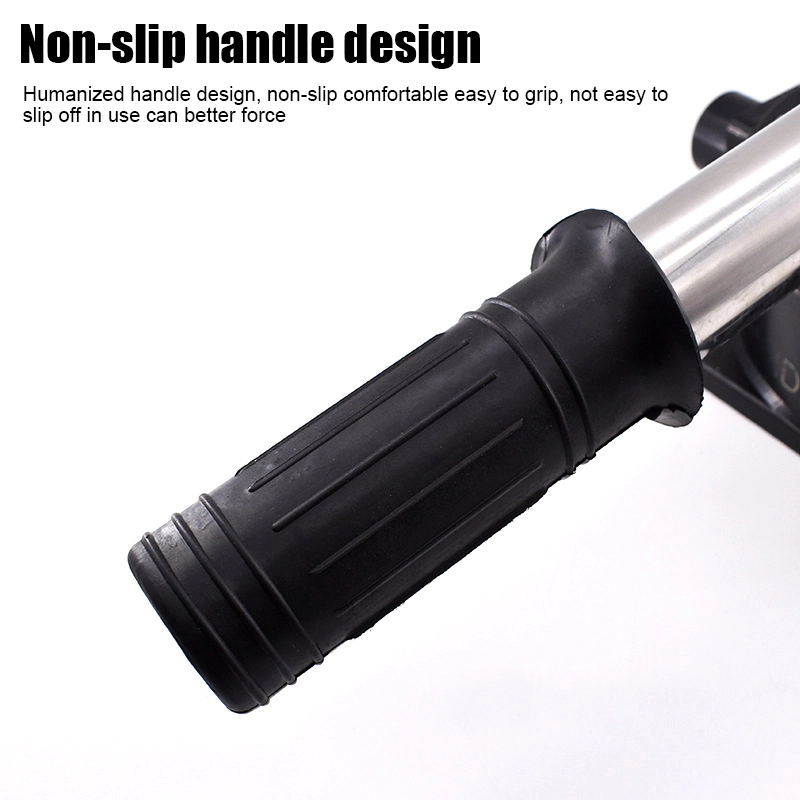
Handle geometry and the stable base determine how much of the published 50 per minute stroke rate a crew can hold.
The published usage note is narrow-bilge drainage — the pump can be installed in places where other pumps cannot be placed. That single sentence drives most of the mounting decisions below.
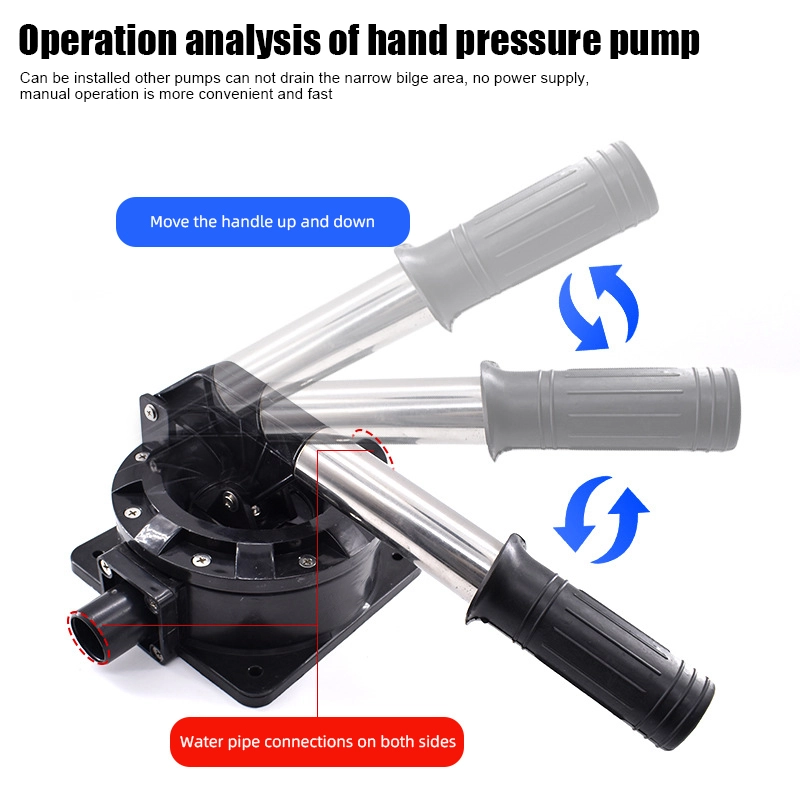
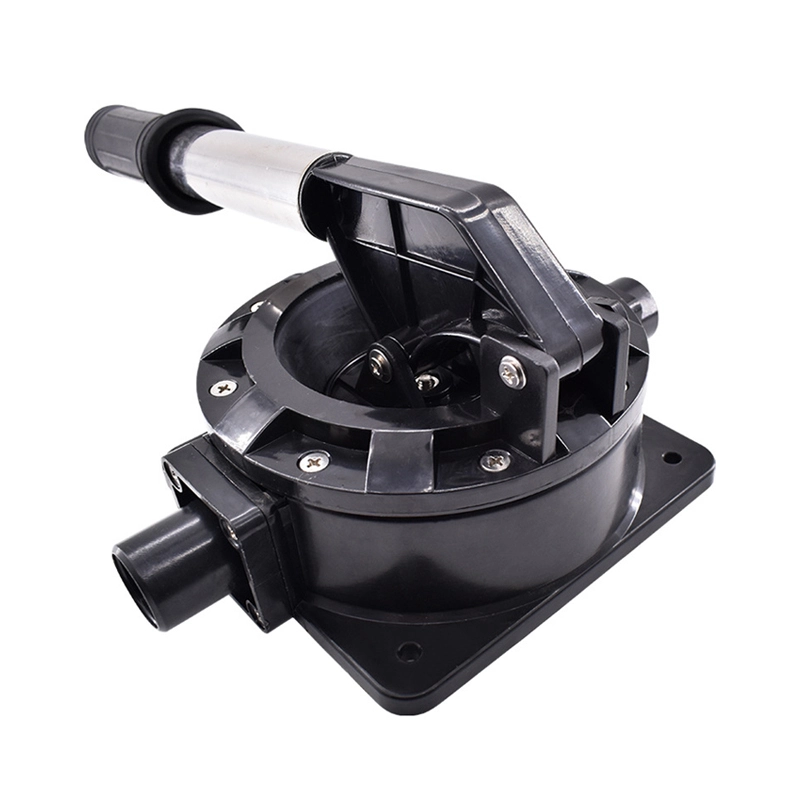
The compact body is specified for narrow bilge areas; the handle clearance is the dimension that is most often missed on site.
Six duty scenarios are named for this pump. Each one lands on a different product fact and a different decision for the buyer — use the table to move from the job on board to the line item on the order.
| Duty scenario | Product fact that carries it | Buyer decision |
|---|---|---|
| Emergency bilge dewatering in a lifeboat or rescue boat | Manual diaphragm operation with no electrical supply required | Confirm the CCS certificate and the IMO MSC.48(66) / ISO 18813:2006 declaration before the arrangement is inspected |
| Manual bilge draining on a yacht, speedboat or fishing boat | 32 L/min published flow with Ø25 mm standard ports | Match the hose and fittings already on the boat, or move to the optional Ø32/Ø38 mm ports for a new run |
| Stand-by unit when an electric pump fails or power is lost | No power source needed; self-priming lift of 2 m | Store it where the handle can be worked in the dark and where the inlet hose can reach the low point |
| Quick removal of minor seawater leakage and water on deck | 1 kg slim body, non-slip handle, stable base | Decide between a permanently screwed-down mount and a loose stowage point with a long enough suction hose |
| Emergency salvage or temporary transfer of fresh water and seawater | Medium list: seawater, fresh water, non-corrosive liquid | Keep corrosive chemicals and heavily debris-laden water off this pump entirely |
| Emergency drainage on inland waterway small vessels and work boats | Engineering-plastic housing described as corrosion and pressure resistant | Check the bilge opening against the slim body and the handle arc before ordering the mounting hardware |
The service notes published for MB1125 are organised by interval below. The one prohibition is absolute: mineral oil must never be used on this pump, because it damages the plastic diaphragm.
| Interval | Task | Why it matters on this pump |
|---|---|---|
| After every use | Flush the pump chamber with fresh water | Prevents salt crystals from jamming the diaphragm and valve seats after seawater duty |
| After every use | Work the handle through full strokes while flushing | Moves fresh water past both check valves instead of only through the chamber |
| Before long-term storage | Clean and dry the pump completely | Residual moisture and salt are what shorten the life of a stored standby unit |
| Ongoing — moving joints | Apply silicone-based lubricant to the moving handle joints | Keeps the linkage free; mineral oil is forbidden because it attacks the plastic diaphragm |
| Periodic inspection | Check the linkage and fastener screws for looseness | A loose linkage wastes handle stroke before the diaphragm is fully deformed |
| Periodic inspection | Inspect the diaphragm and check-valve discs for wear or cracks | Worn or cracked discs break the one-way seal and the pump stops priming from 2 m |
| Always | Do not pump liquid with large solid particles or corrosive chemicals | The medium list stops at seawater, fresh water and non-corrosive liquid |
For the post-use chamber flush that keeps salt crystals out of the valves.
For the moving handle joints. Mineral oil is prohibited on this plastic diaphragm pump.
For drying the body before long-term storage of a standby unit.
For the periodic check of linkage and fastener screws on the base and handle.
Two things slow an approval down more than price: the wrong port size on the order and a certificate pack that arrives after the inspection. Settle both here.
Inlet and outlet as listed for MB1125. Choose this when the boat already runs 25 mm bilge hose and the refit has to reuse existing fittings.
Request Ø25 mm quotationOptional inlet and outlet size for a new hose run or a mixed installation. Confirm availability and fitting schedule with the supplier.
Request Ø32 mm quotationThe largest optional port listed for the model. Suitable when the yard standardises on a single larger hose family across the fleet.
Request Ø38 mm quotationQuotations for MB1125 are handled as a request-for-quote, not an online checkout. Include the port size and the certificate requirement so the response covers both.
Port size, certificate pack and delivery window are the three items that hold up an order. Send them together and the quotation comes back complete — 32 L/min, 2 m suction, 1 kg body, Ø25 mm standard or Ø32/Ø38 mm optional.
Keep adjacent product options together for a faster catalog comparison.
Discover JIEXI's Marine Wiper Assembly, crafted from 316 stainless steel for unmatched durability and seamless integration with marine electrical systems. Essential for marine safety and reliability.
View product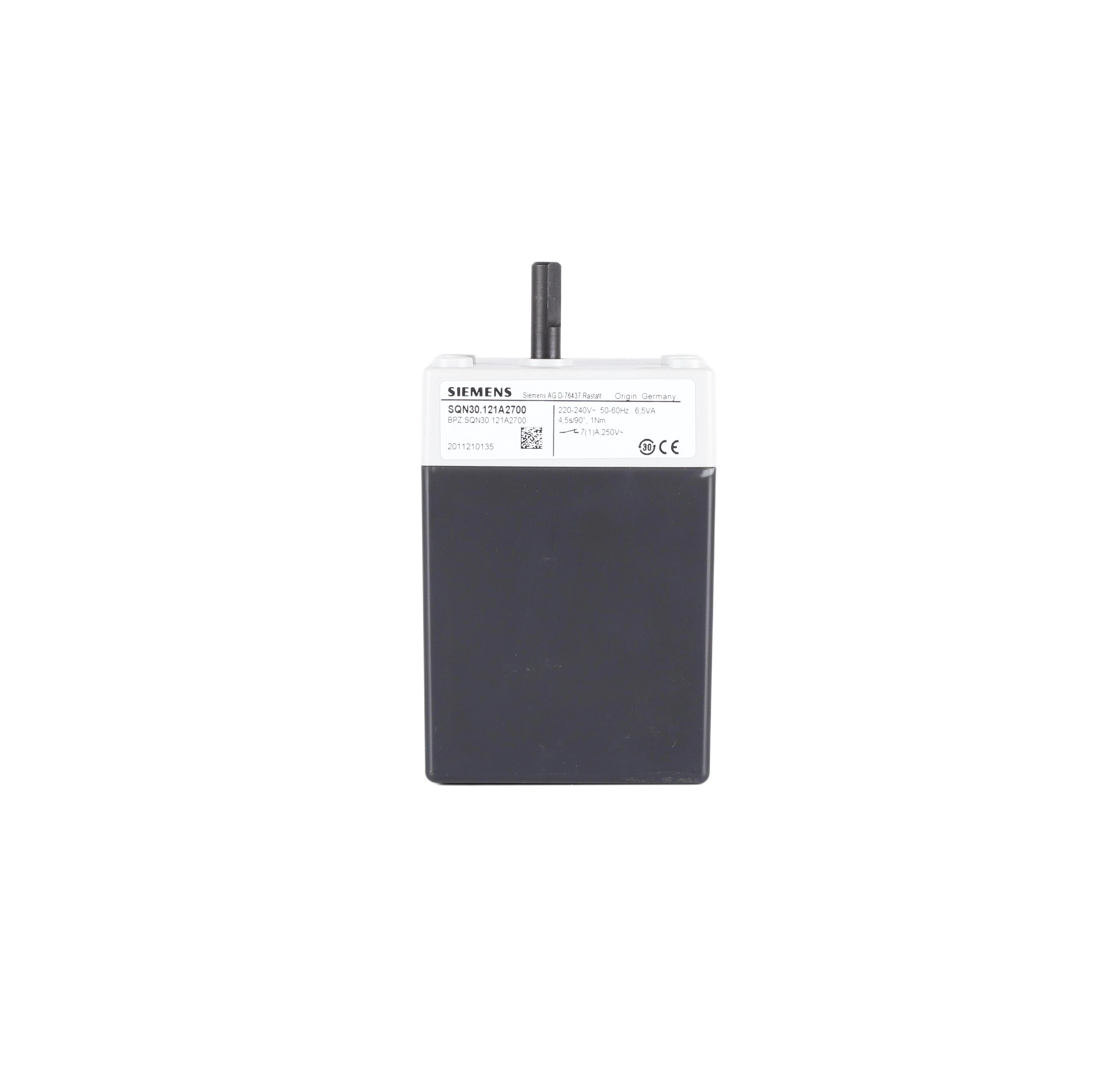
Siemens SQN series servomotors for accurate burner control, suitable for marine boilers requiring precise fuel regulation and dependable spare parts support.
View product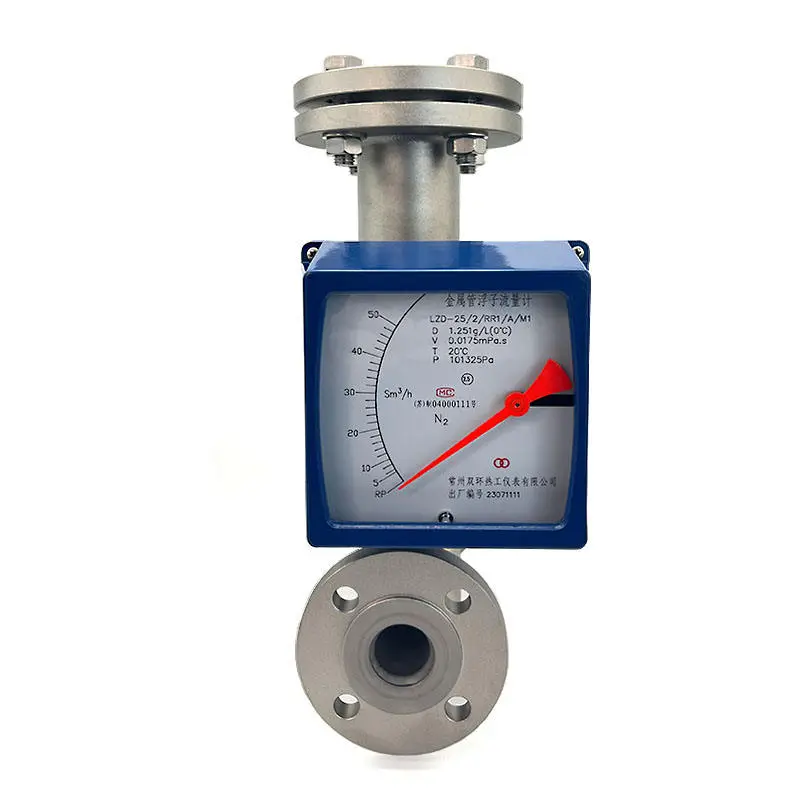
Metal tube flow meters are suitable for liquid and gas applications, with three connection methods and multiple displays. Rotary flow meters have a wide range of applications and are easy to install…
View productthe published specification lists 32 l/min flow, a 50/min repeat rate, a 2 m suction distance and ø25 mm inlet and outlet ports. optional ø32 mm or ø38 mm ports are also listed, and the pump weighs 1 kg in its engineering-plastic housing.
it is a manual diaphragm pump: the reciprocating handle drives an internal linkage that deforms the diaphragm, while the inlet and outlet check valves open and close alternately. this self-priming action lets it lift water from up to 2 m below the inlet without a separate priming fill.
the medium list covers seawater, fresh water and non-corrosive liquids. do not pump liquids with large solid particles or corrosive chemicals; use a deck strainer or pre-filter where dirty bilge water is expected.
the specification table states a ccs certificate, compliance with imo msc.48(66) and iso18813:2006. the product description also uses the wording solas and med certified, so ask the supplier for the certificate set that matches the exact model, batch and port configuration before quoting it to a surveyor.
flush the pump chamber with fresh water after each use to prevent salt crystals from jamming the valves, then clean and dry it before long-term storage. apply silicone-based lubricant to the moving handle joints, never mineral oil, and periodically check the linkage, fastener screws, diaphragm and check-valve discs for wear or cracks.
a pressure relief valve limits chamber pressure, and a fusible plug is stated to melt above 75 °c to release the chamber. the emergency shut-off valve opens as the handle builds pressure, allowing the medium to flow through the pump.
